
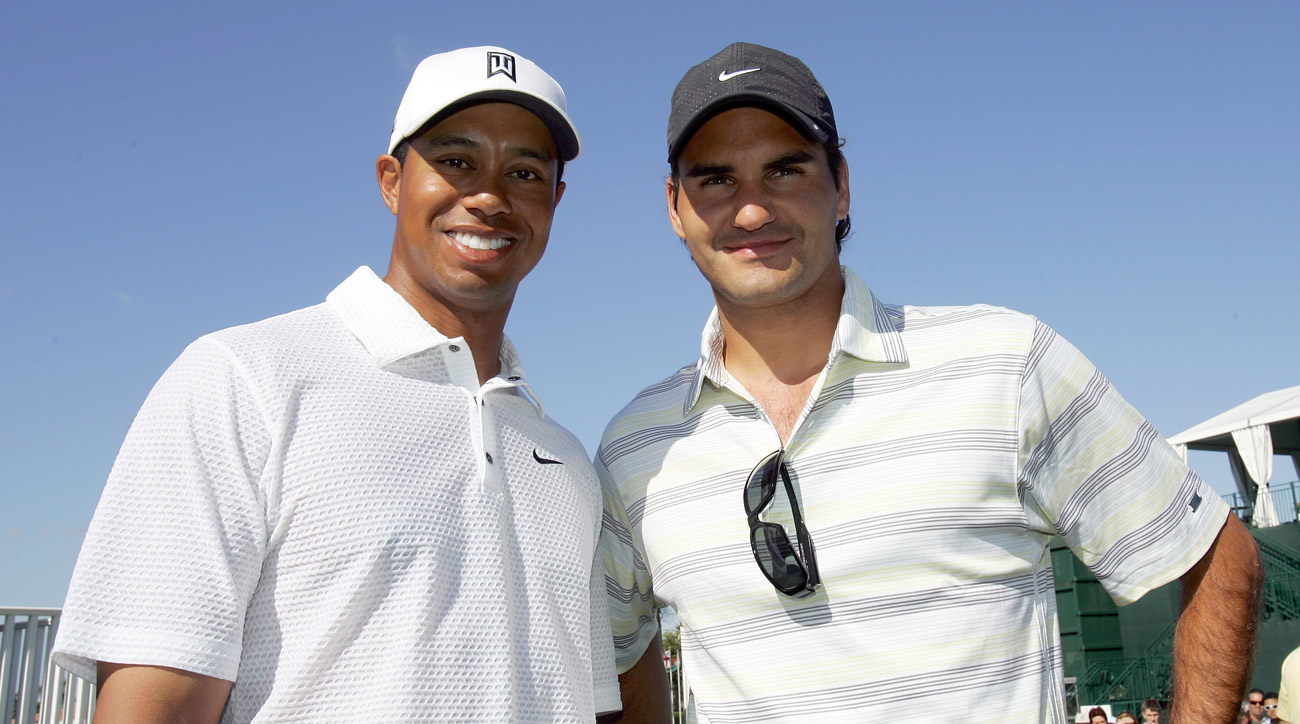
As Roger Federer lifted the Norman Brookes Challenge Cup for his 20th Grand Slam with tears streaming down his face, Tiger Woods would have sat up and taken notice.
There is no disputing the fact that the pair are the greatest players of their generation, if not of all-time. The sheer weight of numbers places them in a class of their own. In Woods’ case, he won a mind-boggling 14 major championships in 46 starts between 1997 and 2008. This is a win-rate of 30.4%.
Federer meanwhile romped to an astonishing 17 grand slam titles in 37 events from his first win at Wimbledon in 2003 to his triumph at the 2012 edition. A success rate of 45,9% which is simply remarkable.
Such dominant runs are impossible to sustain, however, irrespective of the sport. When Tiger limped to victory in the 2008 US Open at Torrey Pines for his 14th major title, breaking Jack Nicklaus’ record-haul of 18 seemed a formality. Yet here we sit, ten years on with Tiger’s pursuit stalled.
Like Woods, Federer’s stranglehold on the majors came to a grinding halt. Following his victory at the All England Club in 2012, Federer only reached the final in three of the next 15 Grand Slams he contested.
Despite sharing similar stretches of dominance and near-invincibility, Woods and Federer are polar opposites in terms of style. Throughout Woods’ career, he has been known for violent, often wayward shots and a fiery temper. In contrast, Federer has arguably the most languid and effortless technique in the game to match an always-serene demeanour.
It thus came as little surprise when Woods’ physically-taxing swing and an over-zealous training regimen caught up with him. The result for the American was two years and eight majors lost to injury and four back surgeries. At this point, Woods’ list of surgeries is as long as his major championship trophy cabinet is full. To date, the number of times Woods has reportedly gone under the knife to fix knee or back issues stands at 14.
Federer though has benefitted from fluid movement around the court that is unparalleled on the ATP Tour. This helped the Swiss maestro avoid the “OR” for the first 18 years of his unbelivable career.
That was until he ran a bath for his twin daughters… Yes, the greatest tennis player of all-time’s only serious injury was not even tennis-related. The surgery prevented Federer from playing the US Open or representing Switzerland at the Olympics, extending his barren spell at the slams to four and a half years.
Refreshed, recovered and revitalised for 2017, Federer returned at the Australian Open as the 17th seed. While his path to the final was far from smooth, going the distance against both Kei Nishikori and Stan Wawrinka, he took full advantage of the opportunity to end his drought. Playing in his sixth final at Melbourne Park against old foe Rafa Nadal, Federer triumphed in a 3hr 37min five-set epic for his fifth title.
The Aussie Open victory was the springboard for Federer’s most successful season in a decade. Wins at Indian Wells and the Miami Masters were followed by an eighth Wimbledon crown. Federer was sublime during the fortnight at SW19, waltzing to the final without dropping a set before routing Marin Cilic 6-3, 6-1, 6-4.
At 36-years-old, most tennis players’ careers are finished. But Federer looks far from done. He dispatched players a decade his junior in the run-up to this year’s Aussie Open final like one swats a fly. Facing Cilic in the final, Federer was imperious, mediocre and other-worldly as he won his 20th Grand Slam title in five sets, winning the final set 6-1.
The key to Federer’s success late in his career has been terrific scheduling and management of his workload. After the early-success on the hardcourts of Australia and America last year, Federer opted to skip the entire European claycourt season to remain fit for the grasscourt leg of the schedule. The decision paid dividends as he went on to win the Gerry Weber Open for a ninth time in the tune-up for his Wimbledon campaign.
Woods needs to take a leaf out of Federer’s book if he too is to be successful in the twilight of his career. From a scheduling standpoint, Woods appears to be doing the right things. He made his first appearance at Torrey Pines this weekend where he showed flashes of brilliance en route to a T-23 finish that exceeded expectations. He will now take the next two weeks off before teeing it up in the Genesis Open. It remains to be seen, however whether he will attempt to play consecutive tournaments at any point this year or err on the side of caution.
Tiger will also have to devise new game plans if he is to add to his tally of 79 PGA Tour wins. He is too caught up in trying to go toe-to-toe with guys nearly half his age off the tee. This week, though he was 4 yards above the field in average driving distance, his accuracy was woeful.
He hit only 17 of 56 fairways all week, his lowest return at an event in 13 years. He should look to sacrifice some clubhead speed and distance if he is to find more fairways. You cannot expect to be in the hunt on the PGA Tour if your Fairways in Regulation is a shade over 21%.
Don’t get me wrong, while he has a reputation for being stubborn, he does appear committed to change in other aspects of his game. For example, Woods used to begin his warm-ups on the range by hitting wedges before working his way through the bag and finishing off with driver. Reports since his return suggest that he has gone the other way, beginning with driver to loosen up his fused back before going through the rest of the bag.
Woods has already announced his decision to build his schedule around the four majors this year. At Torrey Pines this week, Tiger showed glimpses of the play which made him the most feared player in the world.
He showed that he still has the mental fortitude to grind out a round. Hitting only three fairways and nine greens and still finding a way to post two-under as he did on Saturday takes some doing. Said Tiger himself: “All I had was my short game and my heart.” Definitely the words of a man still up for the fight.
As sensational as a Tiger Woods resurgence would be, history and time is against him. He is 42 and onto the proverbial back-nine of his career. What’s more is Julius Boros is the only man to win multiple majors after the age of 40. Tiger needs 5 more majors to break Nicklaus’ record which has stood for more than 30 years.
As his friend Roger Federer has shown him over the past 12 months though, anything is possible.
Photo: Getty Images
 Free Drop Media