
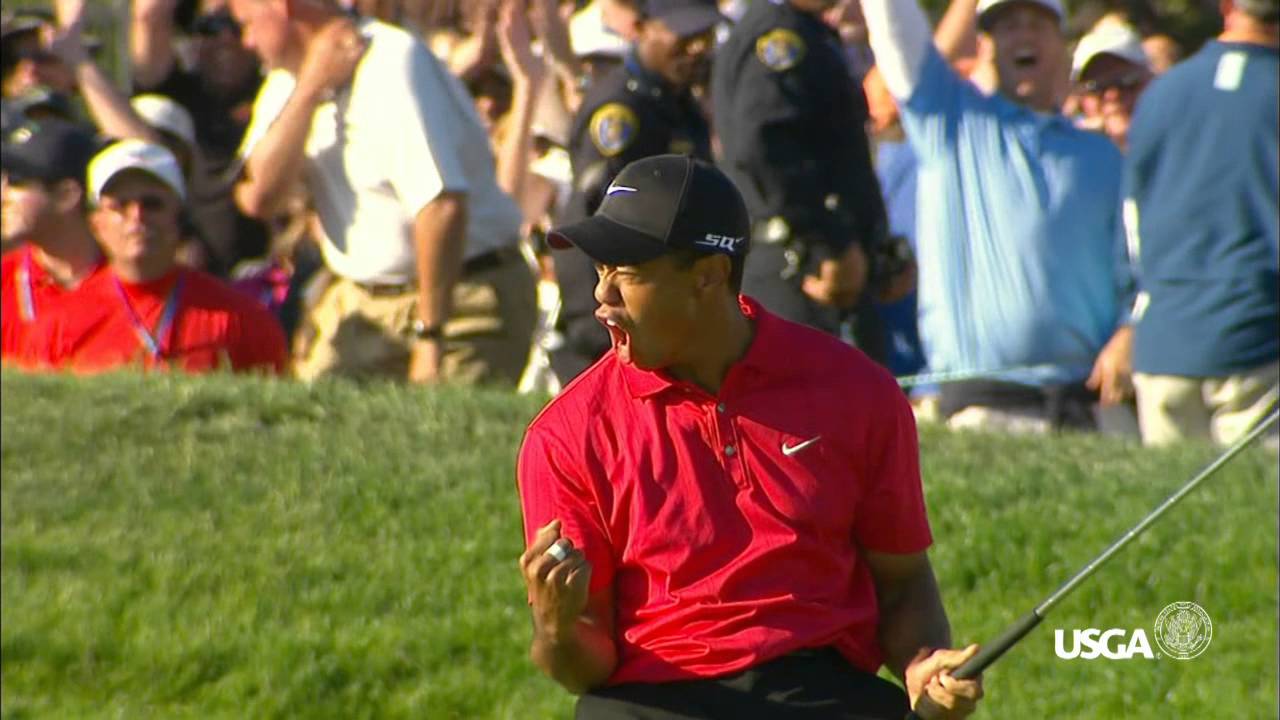
At the traditional Champions Dinner ahead of last year’s Masters Tournament, Tiger Woods told Jack Nicklaus that he was “done”. After four back surgeries in three years and numerous aborted comeback attempts, a career which had captured the imagination of golf fans for two decades appeared to be coming to a premature and undignified end. Fast-forward 12 months and the 14-time Major champion is widely tipped to don the Green Jacket for a fifth time.
When Woods announced that he’d make his latest competitive return at last year’s Hero World Challenge, many rolled their eyes. Between 2014 and 2017, Woods played a meagre 20 events and none at all in 2016. Of those 20 events, he withdrew from four of them and missed seven cuts. After a disastrous comeback in 2017 which saw him enter four tournaments in five weeks only to shut down his year after round one of the second event, Woods’ comebacks began feeling like Groundhog Day.
As we hurtle towards the 82nd Masters though, there is no doubting that this latest return is different. Woods has successfully answered many of the burning questions surrounding his health and the state of his game. For a start, he actually looks pain-free. Following each of his first three back surgeries and subsequent comebacks, he’d adamantly declare that he hadn’t “felt this good in years”. It didn’t take a neurosurgeon or a chiropractor though to see that Tiger was in a world of pain. This time around, there has been no need for such smoke and mirror tactics. Through four tournaments and 18 rounds in 2018, there hasn’t been the slightest hint of pain despite Tiger drawing plenty of physically-demanding lies in the rough. No grimacing, no exiting bunkers gingerly. Nothing.
Unrestricted and uninhibited, Tiger is swinging more like a supple, explosive 22-year-old than a 42-year-old with a reconstructed left knee and fused back. Per the Pgatour.com, he has recorded both the fastest clubhead speed on Tour this season (129.20 mp/h) and boasts a handy average of 121.90 mp/h. This has enabled him to keep pace with the younger generation off the tee with an average driving distance of 304.2 yards, 10 yards further than the Tour average.
Major question marks too loomed over the state of Woods’ short-game. His once other-worldly shot-making around the greens bore closer resemblance to that of a weekend-hacker in recent years than to the man who conjured up moments of magic (see the chip-in at Augusta’s 16th) seemingly at will. In 2015 at the Phoenix Open, Woods looked all at sea around the greens. Flubbed and thinned chips consigned Tiger to a then career-worst round of 82. That calamitous Friday at TPC Scottsdale led to murmurs that the magic had ebbed from his wedges with some even suggesting a case of the chipping yips.
Woods has dispelled any such notions in emphatic fashion this year. He’s made shots regarded by the commentators as extremely challenging seem routine even from the tightest of lies. His scrambling percentage of 64.8% places him 17th on the PGA Tour in the category. When one considers how seldom Woods has played in the last four years, his chipping and pitching is remarkably sharp.
Woods’ trusty Scotty Cameron has also been red-hot this year. Taking 1.54 putts per green this season has allowed him to gain .739 strokes on the field per round with putter in hand. Not only has this propelled Tiger to two consecutive Top-five finishes but it has also drawn comparisons to the Tiger of old.
As spectacular as Woods’ short-game has been so his driving has been as suspect. Woods has hit a modest 51.61% of fairways this season. Only 11 players have achieved a lower percentage. Moreover, the driver has betrayed him at the moment critique already this year. Needing a birdie on the Par-5 16th hole to keep his title bid at the Arnold Palmer Invitational alive, Woods snap-hooked his tee-shot Out of Bounds to derail his challenge. Tiger fans will be hoping he can get the big stick under control by the time The Masters rolls around.
Though there have been flashes of brilliance, there is still room for improvement with Tiger’s irons too. At a shade over 61%, Tiger is not hitting as many Greens in Regulation as he’d like. Augusta has always placed a premium on quality ball-striking evident in the stat that nine of the past 11 Masters champions have finished in the top six in the Greens in Regulation category. Even if Woods does find the green more often though, it is only half the battle won. On the treacherous Augusta greens, it is vital to leave the ball in the right spots. At an average proximity to the hole of 37’ 3’’, Woods needs to put his ball closer to the hole on the lightning-fast, contoured greens.
Fortunately, Woods has allayed any fears over his fitness and his body’s ability to withstand the rigours of tournament golf. Unlike in 2017, he has been able to play consecutive events twice this year. This highlights that he has regained a lot of fitness and is able to recover adequately between events while still being able to practise and stay sharp.
Woods’ pursuit of a first Major title since the 2008 US Open and a first Green Jacket since 2005 is the most compelling storyline heading into Masters Week. With four Top-25s in five starts including two top-5s, Woods has shown he is not there to make up the numbers. Having vaulted 553 places up the world rankings from 656th at the end of 2017 to 103 at the time of writing, Woods’ game is heading in the right direction.
Suffice it to say, Woods will drive down Magnolia Lane riding a wave of momentum. And whether his competitors admit to it or not, his presence on the leaderboard will send shockwaves through the field.
Photo: United States Golf Association
 Free Drop Media